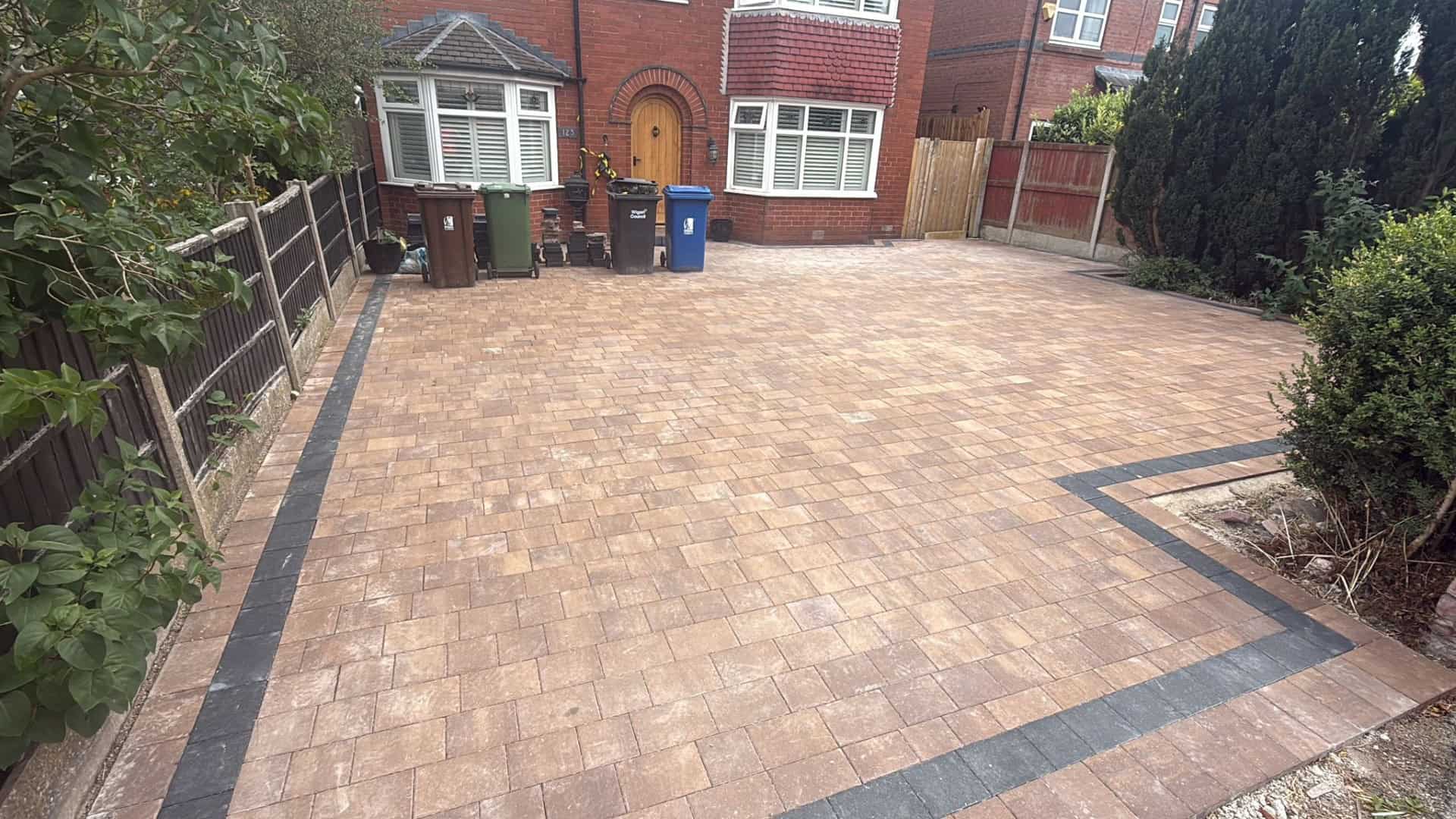
Block paving gives you far more choices than a simple light or dark finish. The block material, shape, laying pattern, border and drainage design all influence how the driveway looks and performs. It is easy to spend time comparing colours while overlooking the decisions that matter most beneath the surface.
For a Warrington home, begin with the space you have and the vehicles that will use it. Then choose a design that complements the property and can be installed with the preparation the site needs. This guide will help you narrow down the options before requesting a quote for block paving in Warrington.
Measure the Space Around Real Vehicles
A driveway plan should account for more than the number of cars it can hold on paper. Consider how doors open, how people walk to the entrance and whether bins or bikes need to pass parked vehicles. A border, planting bed or decorative curve has value only if the remaining parking area remains comfortable to use.
Look at access from the road as well. A narrow entrance may require a simple, clear layout rather than complicated features near the pavement. If you regularly reverse into the space, think about where tyres track and turn. These repeated movements affect the demands placed on the paving.
A site survey can reveal level changes that are easy to miss by eye. The final surface must work with the threshold of the house, neighbouring paths and any existing drainage points.
Choose a Block Material That Suits the House
Concrete paving blocks offer a wide selection of shapes, colours and finishes. Some have crisp edges suited to a contemporary property; others have a softened, weathered appearance. Clay pavers bring a different character and colour range. The right choice depends on the house and the type of driveway you want.
Take samples outside. A colour seen under showroom lighting may look warmer, paler or more variegated in daylight. View it beside the brick, render or existing stonework, and consider how the proposed border changes the overall effect. If possible, look at a larger laid area rather than judging from one block.
Do not assume a more expensive material will automatically suit your home better. A well-chosen standard block, laid in a considered pattern, can have more impact than a premium block surrounded by too many contrasting details.
Decide on a Pattern for the Whole Area
Herringbone is a familiar driveway pattern that creates visual movement and can work well where vehicles turn. Stretcher bond produces a simpler linear look. Other layouts may suit particular block shapes and property styles. The installer should recommend a pattern appropriate for the chosen units and the intended vehicle use.
The driveway’s shape affects the decision. A pattern that looks clear on a rectangular sample may produce awkward cuts around a curved boundary. Think about how the lines will meet the pavement, front steps and borders. A good plan considers the entire frontage rather than repeating a sample photograph across it.
For a small space, a straightforward pattern often gives the eye somewhere to rest. Larger driveways can carry stronger detailing without appearing crowded.
Use Borders With a Purpose
A contrasting border can define the edge of the driveway, draw attention to the entrance or tie the design to an existing path. It can also help distinguish a parking area from a planted section. The most convincing borders serve one of those purposes rather than being added simply because the option exists.
Consider how wide the border appears once a vehicle is parked. A heavy dark outline may reduce the apparent size of a small driveway, while a subtle tone change can frame it without dominating. At the edge of a planted bed, the restraint beneath the visible finish is important for keeping the paving stable.
If your frontage includes a patio or path, coordinate the finishes without necessarily matching every block. JFL also creates patios in Warrington, so the routes around the house can be considered together.
Ask How the Base Will Be Prepared
Blocks are only the visible layer. Excavation, a suitable compacted sub-base, bedding and secure edge restraints all contribute to the finished driveway. The required construction depends on ground conditions and vehicle use. An installer should explain the specification proposed for your particular site.
If an old driveway has sunk, simply laying new blocks over it risks carrying the problem forward. Ask whether soft spots, tree roots, old foundations or unsuitable material have been identified. Find out how old surfacing will be removed and disposed of, and what happens if unexpected ground is uncovered during excavation.
Good preparation is not the most photogenic part of a project. It is often the part you will be most glad was done properly several years later.
Understand Standard and Permeable Block Paving
Not every block paved driveway lets water soak through. Conventional paving and purpose-designed permeable block paving are different systems. A permeable installation relies on suitable joints and an appropriate base, as well as the paving units. The government’s guidance on permeable front-garden surfacing explains why the construction beneath the surface matters.
For an English front garden, the general planning rule considers whether rainwater can drain through or is directed to a suitable permeable area. A larger impermeable surface without that provision may require permission. Ask how the proposed block paving will handle water rather than assuming the gaps between ordinary blocks solve the issue.
Even with a permeable system, the soil and site conditions need assessment. A driveway should not send runoff towards the house or across the public pavement.
Think About Future Maintenance and Repairs
Block paving offers the possibility of lifting individual units for localised repairs or access to services. That flexibility is valuable, but it does not mean the driveway looks after itself. Debris can collect in joints, weeds may establish in that debris and jointing material can need attention over time.
Ask for aftercare instructions suited to the specified blocks and jointing. An aggressive cleaning method may remove jointing or affect a decorative finish. Keep spare blocks if the product allows, as finding an exact colour match years later can be difficult. If an area begins to dip, investigate the cause rather than only replacing the visible units.
A design with many colours and unusual pieces may also be harder to match in future. Simplicity can be useful as well as attractive.
Compare Quotes on the Same Basis
A meaningful quote should identify the paving product, approximate area, excavation, base preparation, edging, drainage and disposal. Clarify how existing steps, covers and transitions are handled. If two contractors propose different constructions, ask why before comparing totals.
Published prices are useful for setting a budget, but they cannot reflect every Warrington property. Checkatrade’s 2026 block paving guide describes how materials, preparation, drainage and labour affect the total. A site-specific quotation is needed to turn those general figures into a project cost.
If you are comparing materials more broadly, look at resin driveways in Warrington too. The two finishes offer quite different appearances and repair approaches.
Choose the Design You Will Still Like Later
Block paving can be striking, but the best design is not necessarily the most elaborate. A material that relates to the house, a suitable laying pattern and well-judged borders usually have more staying power than several competing features. Leave enough room for planting and a sensible drainage route where the frontage allows.
JFL Driveways & Building can discuss your layout, show suitable options and prepare a quotation for the complete installation. Contact the team to plan block paving for your Warrington home.