Imprinted concrete and block paving can create a decorative driveway with the appearance of stone, brick or another patterned finish. From the street, two completed drives may look similar. Underneath, though, they are built and maintained differently, and that distinction can affect which one is right for your home.
Imprinted concrete is poured as a surface and patterned while it is being installed. Block paving is assembled from individual units over a prepared base. Neither is automatically the better choice. The answer depends on the look you prefer, your drainage plan, the shape of the frontage and how you feel about future repairs.
How the Two Driveways Are Made
Pattern imprinted concrete starts with a prepared site and a concrete installation. Colour and texture are added during the finishing process to create the chosen appearance. It can resemble paving, stone or other materials while remaining a continuous concrete surface. The installer needs to plan levels, joints, drainage and the finishing sequence carefully.
Block paving uses separate blocks laid in a chosen pattern. The blocks are restrained at the edges and sit over a suitable base. Colour can come from the pavers themselves, and borders or feature areas can be formed with contrasting units.
Both methods need sound ground preparation. An attractive pattern will not make up for a weak sub-base, unsuitable levels or unresolved water pooling. When discussing concrete imprint driveways in Warrington or block paving in Warrington, ask what the complete installation includes.
Which Looks Better Outside Your Property?
Imprinted concrete can give a consistent pattern across a large area. It may appeal if you want the suggestion of individual stones without the many separate joints found in block paving. Colour choices and patterned borders can help the driveway work with the house, although samples should be viewed in daylight before a decision is made.
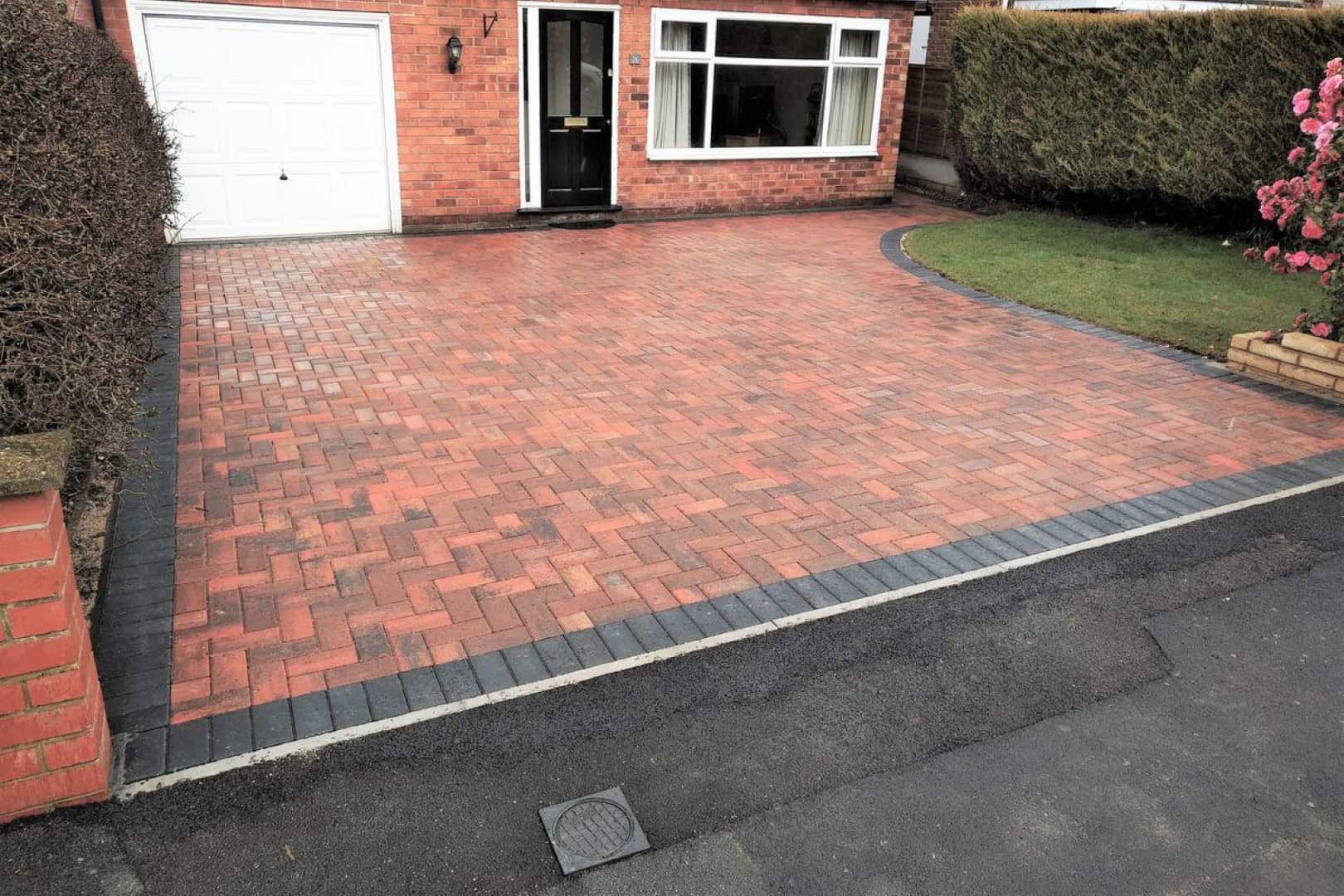
Block paving offers more freedom to combine different shapes, tones and laying patterns. A single restrained block can look calm beside a busy brick façade. A contrasting border can define the parking area or pick up a colour in the house. Too many features, however, can overwhelm a small frontage.
Consider the appearance after several years as well as on installation day. Dirt, wear and repairs become part of how the driveway looks. Ask to see examples of the proposed finish in use, ideally in weather and light similar to your own site.
What Happens If Part of the Driveway Is Damaged?
This is one of the clearest practical differences. Individual paving blocks can often be lifted to reach the base or services underneath, then reinstated or replaced. A repaired area may still be visible if the original blocks have weathered and new ones are a different shade, but there is a route to localised work.
Imprinted concrete is a continuous surface. Cracks or a later excavation can be more difficult to blend invisibly into the original pattern and colour. Joints are part of managing the movement expected in concrete, yet no installer can promise that a poured surface will never crack.
If you expect work to underground services or may change the driveway layout later, repair flexibility deserves particular attention. If you prefer the unified appearance of concrete, ask how joints are positioned and what repair options would be available.
Do They Need Different Maintenance?
They do. Block paving should be kept reasonably clear of soil and debris so weeds have less opportunity to establish in the joints. Jointing material may need attention over time, and isolated movement should be investigated rather than simply covered. Cleaning methods should suit the blocks and jointing system specified.
Imprinted concrete generally avoids the many joints between separate units, but its decorative finish can require periodic care. Ask the installer whether and when resealing is recommended for the particular system, how it should be cleaned and what products should be avoided. Do not treat a generic “maintenance-free” claim as an aftercare plan.
Both surfaces benefit from prompt attention when drainage or settlement problems appear. Routine sweeping is simple; rebuilding a neglected base is not.
How Does Drainage Change the Decision?
Standard imprinted concrete is an impermeable surface. Standard block paving should not automatically be treated as permeable either. A purpose-designed permeable block paving system uses suitable blocks, joints and a compatible base; ordinary paving laid over a conventional base is a different construction.
For a front-garden driveway in England, the Planning Portal guidance explains when permeable surfacing or drainage into a suitable permeable area avoids the need for permission. If an impermeable front-garden surface covers more than five square metres without making that provision, planning permission may be required.
That rule should prompt a drainage conversation before either finish is selected. Ground falls, existing drains, neighbouring boundaries and the location of the house all affect the design. Water must have a planned route; it should not simply be left to find one.
Which Works Better on an Awkward Shape?
A curved or irregular frontage can be handled with either material, but the detailing differs. Block paving can follow curves with careful cutting and a suitable edge restraint. The pattern and border need planning so narrow cuts do not spoil the result. Changes to the layout later may be possible by lifting and relaying sections.
Imprinted concrete can cover a large shape without the same number of individual pieces. The positioning of pattern lines, control joints, steps and drainage channels becomes especially important. Where the drive meets an existing path or different surface, the junction needs deliberate design.
Bring up practical details during the survey: where you turn the car, which door passengers use and whether bins need a smooth route to the pavement. A driveway can look good in a drawing yet feel awkward in daily use.
Is One Cheaper Than the Other?
There is no reliable answer without a measured specification. Material choice, excavation, access, drainage, edges and the existing ground all affect the final quotation. A decorative imprint pattern may cost differently from a standard one; block paving prices change with the block selected and the complexity of the layout.
Published UK figures can be a starting point, but they rarely show whether a new base, waste removal or site-specific drainage is included. Ask for a breakdown of the work and compare quotations covering the same scope. The least expensive surface-only figure can be misleading if another proposal includes preparation that the site actually needs.
If cost is central to the decision, be open about the budget. A simpler design or restrained border may be possible without reducing the quality of the foundation.
Can You Mix the Two Materials?
A combination can work when it has a clear purpose. A block border around imprinted concrete, for example, may define the shape and provide a transition to a path. The materials must be detailed correctly where they meet, accounting for movement, levels and the different way each is installed.
More materials do not automatically make a stronger design. On a small driveway, one main surface and a modest border can often look better than several competing patterns. The house, existing paving and garden planting provide plenty of visual information already.
For another continuous decorative option, you could also consider resin driveways in Warrington. Compare the complete build-up and drainage proposal before deciding on looks alone.
Which Should You Choose?
Block paving may suit you best if individual repairs, pattern flexibility and the possibility of a purpose-designed permeable system matter most. Imprinted concrete may suit you if you prefer a continuous, decorative concrete finish and are comfortable with its particular cleaning, joint and repair considerations.
Neither choice removes the need for careful groundwork. The installer should explain what they found on site, where rainwater will go and how the chosen finish will meet adjoining areas. That is the basis for a driveway that works as well as it looks.
JFL Driveways & Building can help you compare finishes for your Warrington property. Get in touch for a driveway quotation based on your space and preferred design.