

Gravel Driveways in Widnes
A gravel driveway brings a softer, more informal look to a Widnes property. It can sit naturally alongside planting and suit frontages where a continuous expanse of dark surfacing would feel too severe. JFL Driveways & Building can help plan the base, stone, edges and layout so the finished area works for parking as well as appearance.
Get A Free Quote
Choosing the Right Gravel Appearance
Stone colour changes the character of a frontage. Warm tones can complement traditional brickwork, while grey aggregates may suit a more contemporary property. The appearance also changes when the stone is wet, so samples are worth viewing outdoors.
The choice should account for everyday use. A driveway regularly used by cars needs an appropriate aggregate and construction, not simply decorative stone selected for a garden border. The layout should leave a clear walking route, especially if people will move bins, bicycles or pushchairs across the space.
If a smooth, fixed stone finish is more important than the loose-gravel character, consider resin driveways.

Edges Keep the Design Defined
Gravel needs containment. Properly planned edges help keep stone within the parking area and separate it from lawns, planting or paths. The entrance where the driveway meets the pavement deserves particular attention so aggregate is not easily carried outside the property.
A clear border can also make an informal surface look intentional. Blocks, kerbs or other suitable restraints can frame the drive without losing its softer appearance. Where there is a slope or frequent turning, we can discuss whether gravel remains a practical choice and what design measures would help manage movement.
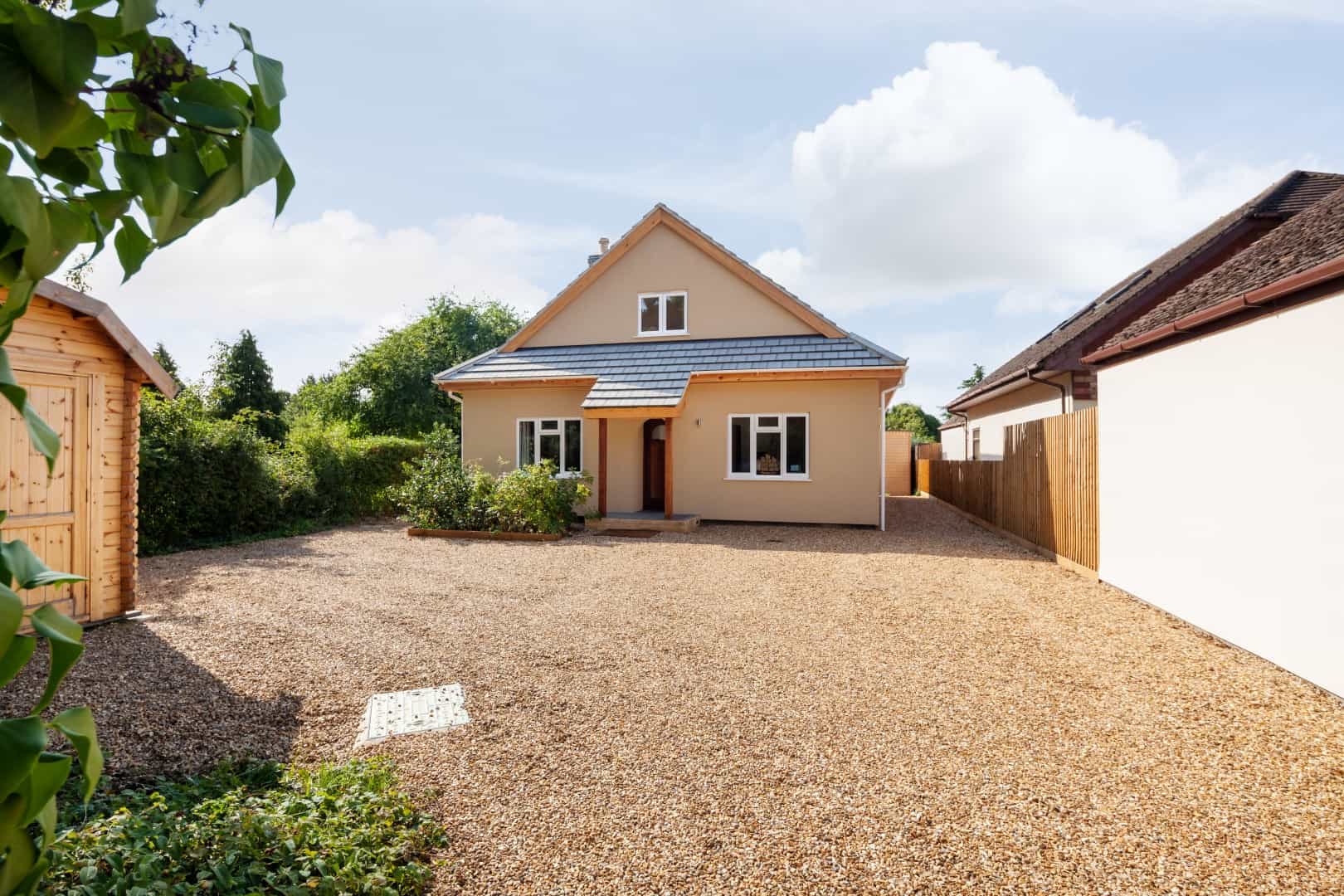
Preparation and Drainage
A gravel driveway needs a suitable foundation for the ground and intended vehicles. Simply spreading stone over a failing surface or soft soil is unlikely to give a stable parking area. Existing levels, excavation requirements and the route of rainwater should be considered before installation.
Gravel can form part of a permeable front-garden approach when the full design and ground conditions support it. The Planning Portal’s front-garden guidance names gravel among the permeable surfacing options. That does not remove the need to check where water goes beneath the surface or whether an individual property has other restrictions.
Looking After a Gravel Driveway
Expect some movement under regular vehicle use. Raking displaced stone back into place, clearing leaves and attending to edges help maintain an even appearance. An occasional top-up may be needed over time. These are normal aspects of a loose-stone surface, not necessarily signs of a failed installation.
If low movement is a high priority, compare gravel with block paving in Widnes or a concrete imprint driveway. Each offers a different balance of appearance, repair options and care.

Request a Gravel Driveway Quote
A well-planned gravel driveway can also help soften the boundary between hard landscaping and the garden. Consider retaining some planting around the edges, using low-maintenance shrubs or ground cover to add colour without obstructing vehicles or sightlines. The stone should complement existing paths, walls and brickwork rather than compete with them. During the survey, we can discuss practical access, storage and turning space so the finished driveway remains attractive and convenient throughout the year.
JFL Driveways & Building can assess whether gravel suits your frontage and explain the preparation and edging proposed. Contact us to discuss a gravel driveway in Widnes.

Gravel Driveway FAQs
It can be, provided the layout has enough room for parking and a practical route to the house. Edging is particularly important in a small area because displaced stone quickly affects paths, planting or the pavement. The slope and amount of vehicle turning also influence suitability.
Loose aggregate can move, especially where cars brake or turn near the entrance. A properly planned edge and sensible finished level help contain it, but occasional tidying may still be needed. The entrance detail should be discussed before the driveway is installed.
It depends on the gradient and how vehicles will use the space. Loose stone is more likely to migrate on a slope, so another material may be more practical. We can assess the site and discuss alternatives if movement would be difficult to manage.
Gravel itself lets water pass between the stones. The performance of the complete driveway depends on its base and the ground below. Where infiltration is limited, the drainage arrangement may need another approach. A survey is more useful than assuming the visible stone settles the issue.
Yes. A paved walking route or defined edge can make the space easier to use while retaining the gravel’s appearance. The junctions, levels and drainage should be designed together. You can see other paving options from JFL when considering a combined layout.
Allow for periodic raking, removal of debris and attention to weeds or stone loss where necessary. The frequency depends on vehicle use, nearby trees, slope and the way the entrance is built. We can explain the expected upkeep for the proposed design during your quotation.