A new driveway changes far more than the space where you park. It affects the first impression of your home, how rainwater moves across the front garden and how much upkeep you can expect over the years. For homeowners in Warrington, resin, block paving and tarmac are three common options, but each suits a different set of priorities.
The best choice depends on your property, the condition of the existing ground, the number of vehicles you park and the finish you want to see every day. At JFL Driveways & Building, we help homeowners weigh those factors before settling on a design. Here is what to consider when comparing the three surfaces.
Start With How You Use the Driveway
Think about the vehicles that need to fit before choosing a colour or pattern. A driveway used by one small car has different demands from one that regularly accommodates two cars, a van or frequent visitors. You may also need room to open doors comfortably, move wheelie bins or walk from the front door without squeezing between parked vehicles.
The shape of the space matters. A long, straight drive might suit a simple tarmac finish, while a wider frontage offers more opportunity for a block paving pattern. A resin surface can bring a consistent appearance to an irregular area. Whichever material you prefer, the layout should be designed around daily use rather than the dimensions of a photograph you have seen online.
Resin Driveways: A Continuous Decorative Finish
Resin-bound surfacing combines aggregate with resin to create a relatively smooth, stone-textured finish. It appeals to homeowners who like the look of decorative gravel but would rather avoid loose stones moving across the pavement or into the house. Aggregate blends range from pale and warm tones to darker mixes that create contrast with brickwork.
A well-designed resin driveway can look particularly effective where a front garden includes planting, steps or a clearly defined entrance. Borders can help frame the surface and protect its edges. The result feels less segmented than block paving because the main area is laid as a continuous finish.
The existing base needs careful assessment. An overlay is only appropriate when the surface beneath it is sound and suitable. If the base is cracked, unstable or poorly drained, covering it does not solve the underlying problem. Our resin driveways in Warrington page explains the option in more detail.
Block Paving: Flexible Design and Individual Repairs
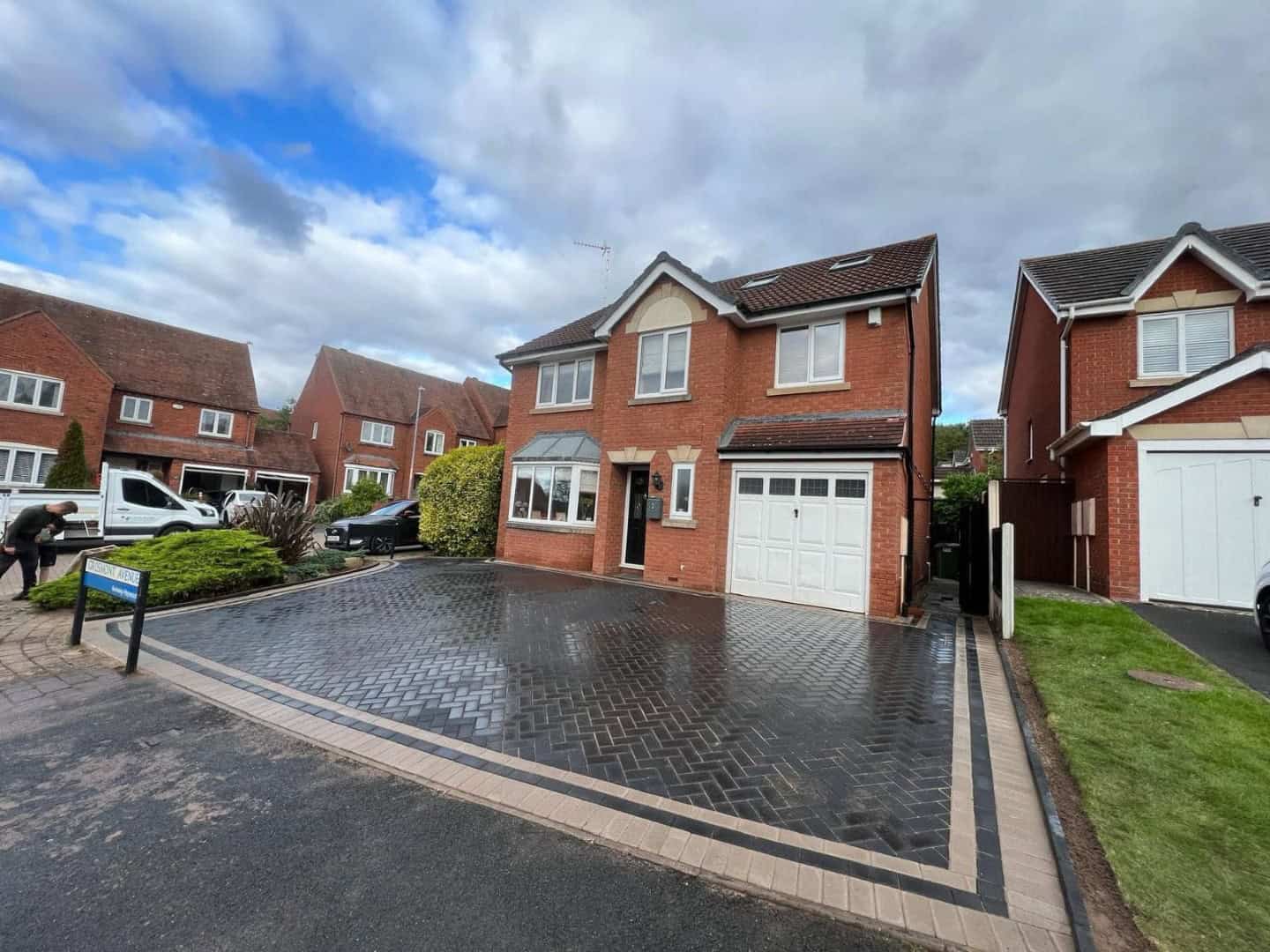
Block paving uses individual concrete, clay or other suitable pavers to form the driveway. Its biggest visual advantage is flexibility: homeowners can choose from different block shapes, laying patterns, colours and contrasting borders. A restrained design can complement a modern house, while a more traditional block can sit comfortably beside older brickwork.
Individual blocks also make localised repairs possible. If a utility trench has to be opened or one area settles, sections can potentially be lifted and reinstated. Matching an older colour exactly is not always possible, but the surface offers more repair flexibility than a single poured slab.
The joints and edges do need attention. Weeds can establish where dirt collects, jointing material may need topping up, and an inadequately prepared base can lead to movement. Correct excavation, a suitable sub-base and secure restraints are as important as the blocks visible at the end. Explore block paving in Warrington if design flexibility is high on your list.
Tarmac: A Simple, Hard-Wearing Surface
Tarmac suits homeowners who want a straightforward appearance and a surface built for regular vehicle use. Its dark, uniform finish can make a small frontage look tidy without competing with the house. It can also work well on larger areas where an intricate paving pattern would dominate the view or stretch the budget.
Edging makes a noticeable difference to the finished result. A block border, kerb or other suitable restraint can give a tarmac driveway a more deliberate appearance and help define planting beds or paths. The base and drainage still need proper design; a smooth top layer cannot compensate for poor preparation underneath.
Tarmac offers fewer decorative choices than resin or block paving. Repairs may remain visible, especially where new material meets an older, weathered surface. If its practical strengths appeal to you, JFL’s tarmac driveway service provides another starting point.
Which Surface Needs the Least Maintenance?
Every driveway needs some care. Leaves, soil and vehicle marks should be cleared before they build up, and nearby planting should be kept from spreading across the edges. The difference lies in the kind of maintenance each surface may need.
Resin-bound surfacing generally benefits from regular sweeping and occasional appropriate cleaning to prevent moss and dirt collecting. Its continuous finish avoids the many joints found in standard block paving, although damage to one part can be harder to disguise. Block paving may need more attention to joints and weeds, but isolated blocks can often be lifted or replaced. Tarmac is comparatively straightforward to sweep and maintain, though local repairs may show.
Ask an installer what cleaning methods and aftercare suit the exact materials specified. A maintenance claim means little unless it reflects the finish and construction you are actually buying.
How Important Is Drainage?
Drainage should be discussed before work starts, especially when a front garden is being turned into parking. In England, the planning rules for a front-garden driveway depend in part on its size and where rainwater goes. A permeable surface, or a design that directs water to a suitable permeable area within the property, can avoid the planning issue associated with a larger impermeable front-garden surface. The Planning Portal’s front-garden guidance sets out the general rule.
Do not assume that a product name guarantees a permeable driveway. Resin-bound surfacing must have an appropriate base and drainage design to allow water to pass through the complete construction. Conventional block paving is different from a purpose-designed permeable block system. Standard tarmac is generally impermeable unless a porous specification and suitable base are used.
Ground conditions also matter. The right solution may include a permeable sub-base, a rain garden, a soakaway where suitable, or controlled falls towards a planted area. The design must avoid sending water onto the pavement or towards the house.
Compare the Whole Installation, Not Just the Surface
Two quotations for the same visible material can cover very different work. One might include full excavation, disposal of the old driveway, a new sub-base, drainage and edging. Another might assume the existing base can remain. Those quotes are not directly comparable, even if both say “resin driveway” or “block paving”.
Ask how deep the proposed excavation will be, what the contractor found during the survey and what happens if unsuitable ground is uncovered. The specification should describe the base, surface, edge restraints and drainage approach. It should also clarify whether steps, walls, manholes or a dropped kerb are part of the price.
An inexpensive surface laid over a weak foundation can become a costly decision. It is usually better to simplify decorative extras than to cut back on preparation that the driveway needs.
Which Option Offers the Best Look for Your House?
Consider the colour of your brickwork, roof and front-door area. Pale resin blends can brighten a shaded frontage, but dirt may be more noticeable. Darker resin or tarmac can create contrast with light render. Block paving can pick up tones already present in the house, although using too many colours and borders can make a small space feel busy.
Try to see samples outdoors and, if possible, in wet and dry conditions. The appearance of an aggregate blend or paving block can change considerably with the light. Keep enough room for planting if it softens the frontage and helps with rainwater management. The best-looking driveway usually feels connected to the property, rather than added as a separate feature.
If you are considering a patterned finish beyond these three options, concrete imprint driveways in Warrington offer another design route to compare.
Match the Choice to Your Priorities
Choose resin-bound surfacing if a continuous decorative appearance is your main priority and the site can support an appropriate installation. Choose block paving if you value pattern choices and the ability to work on individual sections later. Choose tarmac if you prefer a simple, functional finish with a restrained look.
Those are starting points rather than universal rules. A steep entrance, awkward access, existing drainage problem or unstable ground can change the recommendation. So can your budget for the entire project. The most useful question is not which material wins in general, but which complete design works for your particular Warrington home.
Get a Driveway Quote Based on Your Property
JFL Driveways & Building can assess the space, discuss the finishes you like and explain the work needed beneath the surface. Whether you are leaning towards resin, block paving or tarmac, a site visit gives you a firmer basis for comparing your options.
Contact JFL Driveways & Building to arrange a quotation for your Warrington driveway.